Site constraint
Coverage routed around a heritage area in the middle of the pit
Network
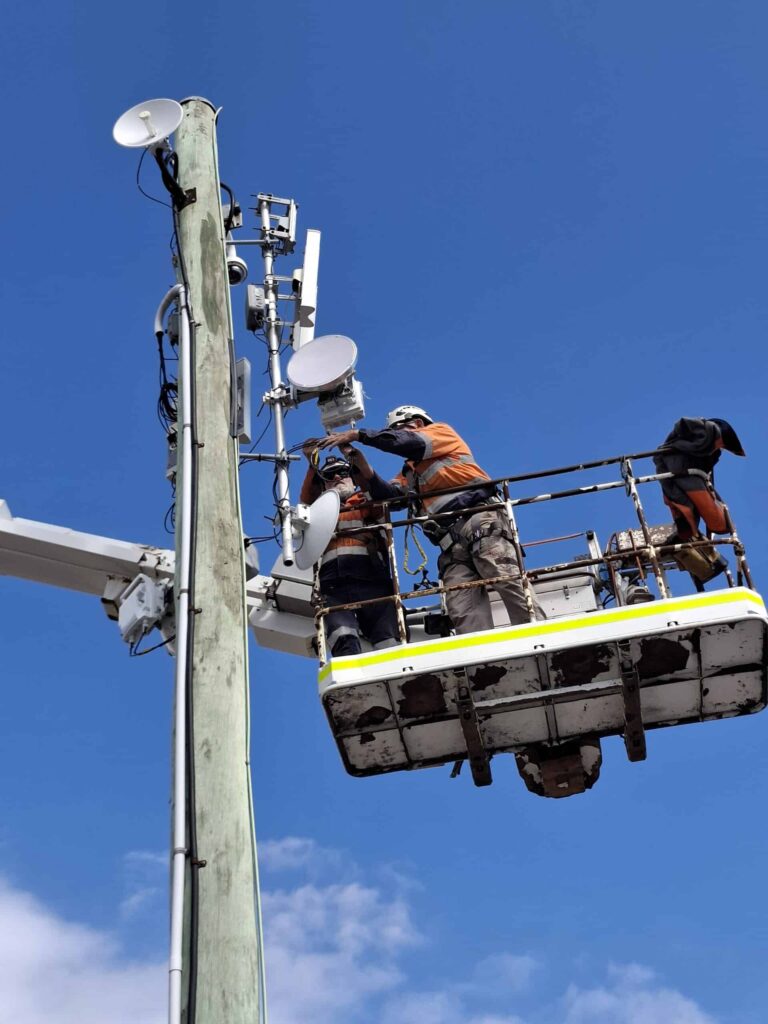
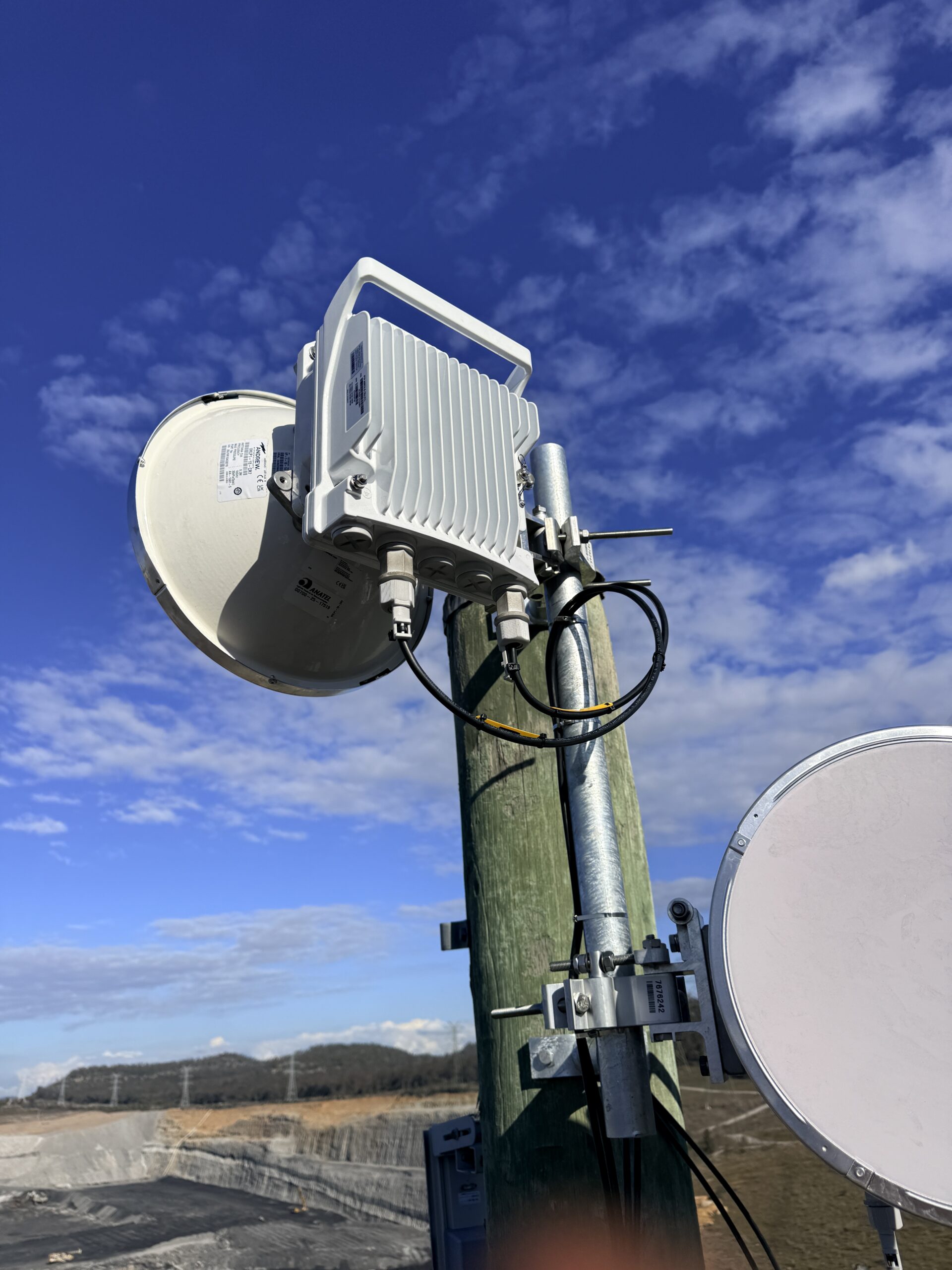
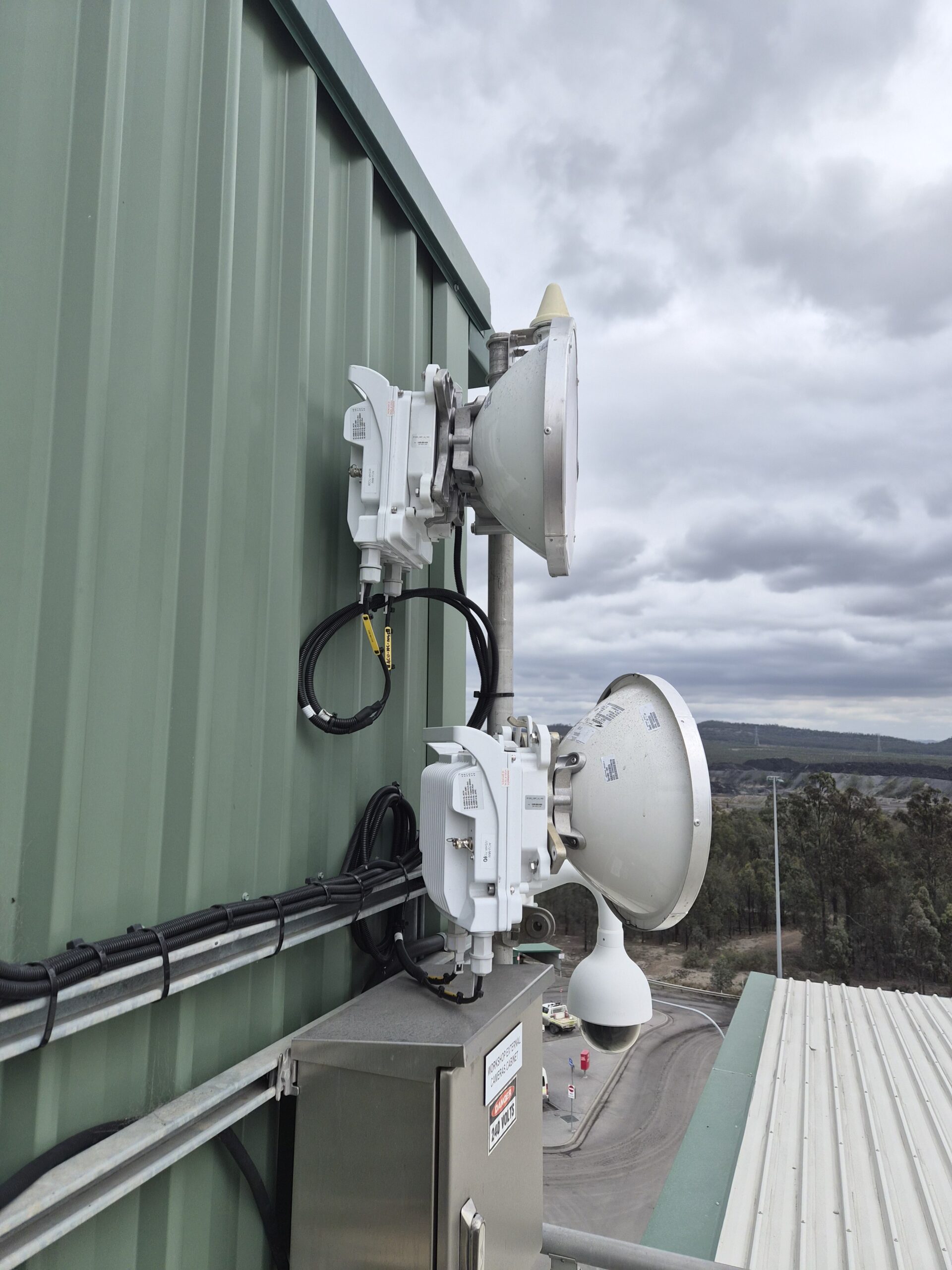
Microwave links on 12 existing site poles
Fleet
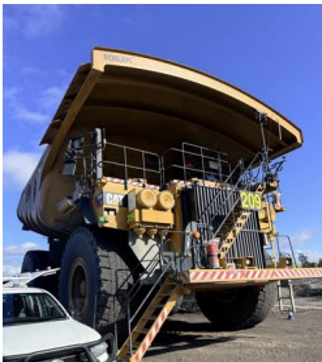
72 vehicles fitted while the mine kept running
Relocatable coverage
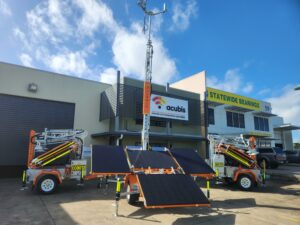
3 RPEQ certified FieldLink 2S trailers
Why did the site network need upgrading?
Collision avoidance and other vehicle systems need a link back to the site network for remote data access, and coverage black spots break that link. At a large open cut coal operation in New South Wales, Acubis helped design a mine site communications network upgrade, supplied the new link and vehicle hardware, installed microwave links on 12 existing site poles, fitted out 72 vehicles, and delivered three FieldLink Mobile Communications Trailers.
The existing network was not ready for the expanding fleet technology. The site carried multiple coverage black spots, ageing fixed infrastructure, and mobile trailers without the power and solar capability to hold coverage through a stretch of cloudy days. On a mine site, a communications failure is a safety hazard, not just an operational one.
The work ran over about six to seven months, with the mine operating throughout.
What made this site hard to cover?
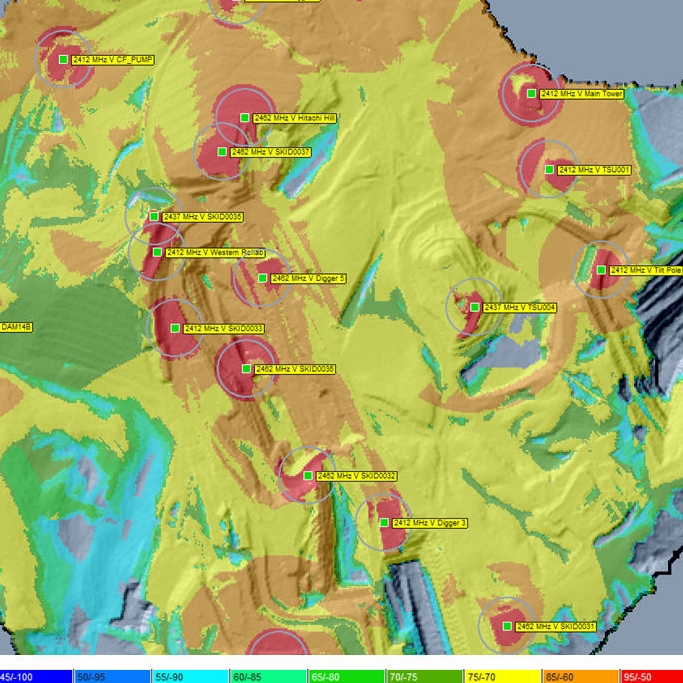
A heritage area sits in the middle of the pit. It cannot be mined, and it blocks line of sight between links on either side of it. A simple line of sight layout would have been straightforward if that ground were available. It is not, so the link topology carries coverage around the heritage area in a continuous loop rather than across it, and equipment stays connected wherever it is working.
The second complication was tree growth. Vegetation between links is still growing, and a layout that holds line of sight today will not hold it for the remaining life of mine. Two existing poles were fitted with extensions to lift their links above the tree line, so the sightlines hold for the life of the network.
Power carried its own risk. If a trailer’s batteries run out across consecutive cloudy days, the coverage that trailer provides drops out with them, and the site is back to carrying a black spot.
What does a mine site communications network upgrade involve?
On this project it covered design assistance on the new link layout, supply of the new link and vehicle hardware, and installations across existing site poles and the vehicle fleet. Three FieldLink Mobile Communications Trailers were built for the site with Emergex Manufacturing, also part of Emergent Group.
Coverage routed around the heritage area
The link topology carries coverage around the heritage area rather than across it, in a continuous loop. Equipment working anywhere in the pit holds a path back to the site network without relying on a sightline through ground that cannot be mined.
Pole extensions sized for future tree growth
Rather than building new towers, two existing site poles were fitted with extensions to lift their links above the tree line and keep line of sight for the remaining life of mine. Without them, tree growth between links would have closed the sightlines down.
Three RPEQ certified FieldLink 2S trailers delivered for the site
Three FieldLink 2S Mobile Communications Trailers, each with a two-panel solar array and RPEQ certified across mechanical and electrical standards, were built with Emergex Manufacturing and delivered to the site, giving it coverage it can relocate rather than coverage it has to build.
New power platform, existing communications gear
The site’s older trailers did not have the power and solar capability to hold coverage through consecutive cloudy days. The new FieldLink trailers were fitted out with communications equipment the site already owned, moved across from those older trailers, so the upgrade replaced the trailer and power platform rather than gear already onsite. Configuration detail is set out on the mobile communications trailer page.
72 vehicles fitted while the mine kept running
The fleet was fitted with Cisco Catalyst IW9167 access points and Cisco Catalyst IE3100 rugged switches, giving onboard systems such as collision avoidance and fleet management a connection back to the site network. The work was done while the mine kept operating, with machine access shared with other work on the same equipment, which extended the install timeline.
How is a project like this delivered?
A network designed to hold coverage as the pit moves, with relocatable trailer coverage and links built to clear future obstructions.
What has the project delivered so far?
The layout no longer depends on a sightline through ground the site cannot mine. The pole extensions keep links clear of tree growth for the remaining life of mine. The three FieldLink trailers give the site coverage it can relocate as the pit changes. And the 72 vehicle installs were delivered as part of the network upgrade rather than added to it afterwards.
How do you plan a mine communications network for life of mine?
Most site network designs answer one question: does this give us coverage now. That is the right question for a network that will sit still. A pit does not sit still.
Over the remaining life of a mine, the working face moves, vegetation grows into link paths, and areas that were clear become obstructed. A layout designed only against today’s conditions carries a failure date nobody has written down. It will be found when a link degrades and someone is sent out to work out why.
Planning for life of mine means asking what changes between now and closure, then designing against that. On this site it meant two things. Coverage was routed around ground the operation cannot mine, because it is a heritage area rather than simply unmined ground. And two existing poles were fitted with extensions sized against future tree growth, so the links hold without a return visit. Both decisions were made at the design stage rather than left to be discovered in service.
Related services
Working out your site coverage
If your site is carrying coverage black spots, ageing communications gear, or trailers that cannot get through a stretch of bad weather, we can assess your coverage and design the network around what your site actually allows.